|
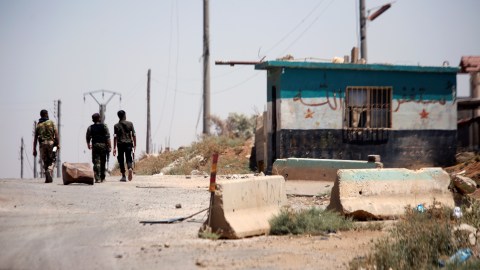
Another war in Iraq? Between growing public grievances and a government that has little capacity to address such frustrations, Ranj Alaaldin writes that Iraq has all the makings of a country that is susceptible to conflict relapse.
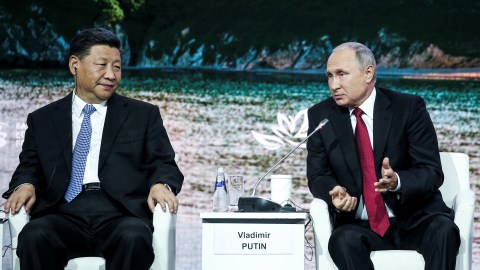
Chinese views on the trade war. Cheng Li explores how the Chinese middle class views the ongoing trade war with the United states, arguing that Washington’s failure to distinguish the perspective of the ruling elite from that of Chinese society could undermine the effectiveness of U.S. policy toward China.
The origins of the U.S.-China trade war. David Dollar explains that the ongoing trade war between Washington and Beijing has its roots in the 2008 financial crisis, which accelerated China's economic catch-up with the West, undermined U.S. fiscal strength, and slowed down China's reform and opening.
John Bolton and the International Criminal Court. National Security Advisor John Bolton’s threat to impose sanctions on International Criminal Court judges and other personnel if they attempt to investigate U.S. citizens is outlandish, writes Constanze Stelzenmüller. Meanwhile, Jeremy Shapiro argues that Bolton's "obsession" with the ICC is anachronistic and ignores the profound challenges facing the Trump administration today.
Madeleine Albright on modern fascism. At a recent Brookings event, Madeleine Albright and Strobe Talbott discussed the growing danger posed by modern-day fascism, as well as other threats to global democracy. Maggie Tennis summarizes the proceedings.
Chinese climate policy. Ye Qi writes that China's new energy and environmental policies, adopted in the wake of the Paris climate agreement, are already delivering positive results.
Turning climate change leadership into global action. David Victor and Veerabhadran Ramanathan explain how climate leaders, such as California Governor Jerry Brown, can push others toward greater steps aimed at climate change mitigation.
|