Not rendering correctly? View this email as a web page here.


April 20, 2018

Brookings on Twitter Brookings on Facebook
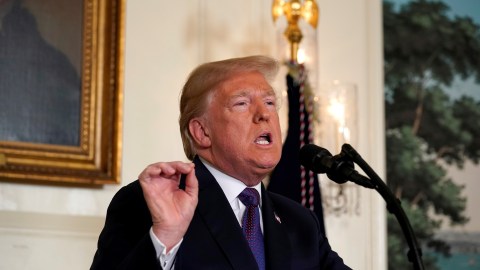
U.S. President Donald Trump makes a statement about Syria at the White House in Washington, U.S., April 13, 2018. REUTERS/Yuri Gripas - RC19863CAF90
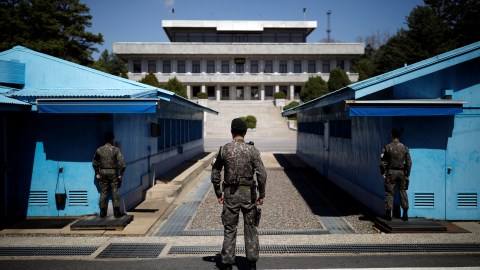
South Korean soldiers stand guard at the truce village of Panmunjom inside the demilitarized zone separating the two Koreas, South Korea, April 11, 2018. REUTERS/Kim Hong-Ji - RC16431E75C0
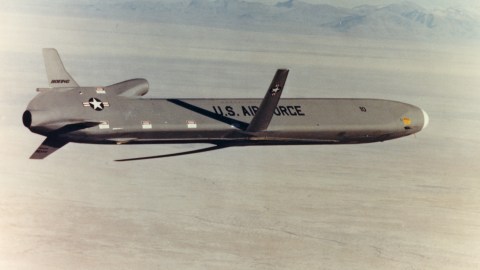
An AGM-86B Air Launched Cruise Missile captured in-flight from a chase aircraft over the White Sands Missile Range, New Mexico, during a program test flight in this undated photo. Tinker Air Force Base History Office/Handout via REUTERS  FOR EDITORIAL USE ONLY. NOT FOR SALE FOR MARKETING OR ADVERTISING CAMPAIGNSTHIS IMAGE HAS BEEN SUPPLIED BY A THIRD PARTY. IT IS DISTRIBUTED, EXACTLY AS RECEIVED BY REUTERS, AS A SERVICE TO CLIENTS - RC1A70AE86B0

Featured quote

How horrific is it that we are particularly disturbed by one way of killing Syrian children but not the other?”

April 15, 2018 | Mara Karlin, The Washington Post

REGIONAL AND TOPIC UPDATES

Middle East

Syria and the Iran nuclear deal. Suzanne Maloney writes that President Trump's relatively restrained use of force in Syria showed that despite the administration’s pugnacious rhetoric, the president may be unwilling to follow through on his threat to scrap the Iran nuclear deal.

Iran-Israel hostilities. Following an Israeli attack against Iranian forces in Syria, Dror Michman and Yael Mizrahi-Arnaud argue that an Iranian response is highly likely and explain what the retaliation might look like.

Russian influence in the Middle East. Daniel Byman contends that across-the-board competition with Russia in the Middle East would be inadvisable for the United States, but he explores what specific pushback against Russia might look like.

U.S. strategy in Syria. Michael O'Hanlon highlights four essential elements of an effective U.S. strategy toward Syria, ranging from continued support for local allies to building stronger cooperation with Turkey.

Asia

U.S.-Japan relations. With an eye on President Trump's recent meeting with Japanese Prime Minister Shinzo Abe, Mireya Solís examines the key ongoing issues between the two leaders.

Oil transaction currency. David Dollar and Samantha Gross argue that although China is taking steps to make the renminbi the default global currency for oil pricing and trading, such a shift away from the U.S. dollar is unlikely to come to fruition in the near future.

Chinese-language podcast. The John L. Thornton China Center has launched a new podcast in Mandarin highlighting Brookings's latest research on China. All episodes are available here.

International affairs and security

The dark side of solar energy. In a new paper, Varun Sivaram explains how the rising solar energy industry empowers political interests that may actually impede a transition toward clean energy.

U.S.-Cuba relations. Ted Piccone writes that the recent turnover in President Trump's foreign policy team is likely to hurt U.S.-Cuba ties moving forward. Meanwhile, in an episode of the Brookings 5 on 45 podcast, Piccone discusses what to expect from the relationship in the post-Castro era.

Trump-Macron meeting. Ahead of President Trump's meeting with French President Emmanuel Macron next week, William Drozdiak highlights the numerous issues that the two leaders—who share an unlikely friendship—will discuss. Separately, Célia Belin joins the 5 on 45 podcast to discuss what to expect from the meeting.

Upcoming events

The future of political Islam: Trends and prospects
Tuesday, April 24 at 9:30 AM to 11:00 AM EDT 

21st Century Security Forum: The National Defense Strategy and its global impact
Thursday, April 26 at 9:00 AM to 1:00 PM EDT

Stay Connected

Sign up for other Brookings newsletters
Brookings RSS Feeds
Brookings on Facebook
Foreign Policy on Twitter