With the pandemic-induced shift to remote work and the slow return of office workers, the demand for downtown real estate—particularly office space—has plummeted. But is converting offices into new housing units—as many observers are suggesting—the best strategy for revitalizing downtowns? Tracy Hadden Loh, Egon Terplan, and DW Rowlands unpack the myths and realities of office-to-housing conversion practices. The authors discuss how a more complete policy toolkit can help public leaders confront the crises of surplus downtown offices and scarce downtown housing while bettering cities and regions.
Community patterns of neighborhood-level investment both reflect and reinforce attitudes on the relative security, stability, and desirability of different neighborhoods. In a recent report, DW Rowlands, Manann Donoghoe, and Andre M. Perry explore the relationship between a neighborhood's share of Black residents and the presence—or, more often, absence—of premium, “fresh format” grocery chains.
Launched in 2018, the Greenmount Life, Opportunity, and Wellness (GLOW) initiative aims to mobilize and coordinate multiple organizations to improve the health and wellbeing of Central Baltimore residents through physical redevelopment and by improving access to health care, nutritious food, and enriching educational and career opportunities. In this Placemaking Postcard, Darius Graham of the Harriet and Jeanette Weinberg Foundation highlights key lessons for other philanthropies and nonprofits.
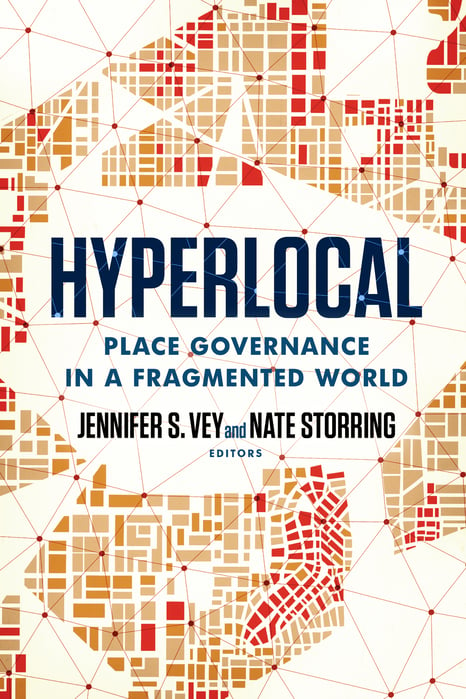
Edited by Jennifer S. Vey and Nate Storring, “Hyperlocal: Place Governance in a Fragmented World” explores the role of place governance in today’s increasingly fragmented and inequitable economic landscape. The book’s eight chapters discuss how, why, and for whom place governance matters, and highlight practices and models for creating more connected, vibrant, and inclusive communities.
Did you know that across 44 of the largest U.S. metro areas, 86% of white residents live in the suburbs? As the Bass Center’s Tracy Hadden Loh and DW Rowlands found in their June 2021 report, the average white populations in core cities dropped by a median 64% in absolute terms between 1950 and 2018, a dramatic shift coinciding with post-war suburbanization.
What we're reading
Hyperlocal preparation for summer heat. In early May, the U.S. Department of Health and Human Services (HHS) issued a warning that this May, June, and July will be between 0.5 degrees and almost 2 degrees Fahrenheit warmer than average for much of the contiguous United States. HHS cautions that early season heat waves—which may be growing more frequent due to climate change—are more deadly and harmful, especially for young children, older adults, or those with chronic health conditions. For cities, higher summer temperatures further compound “the urban heat island effect,” which Hannah Druckenmiller at Resources for the Future (RFF) discusses in a March explainer on the issue. As Druckenmiller details, studies show that a constellation of physical and environmental factors make cities hotter than surrounding regions—and make some neighborhoods hotter (and less safe) than others in the same city.
With summer fast approaching, communities across the United States are preparing for this early seasonal heat. For example, in a May 10 article for Bloomberg CityLab, Philip Kiefer covered ongoing reforestation efforts in New Orleans—a city whose tree canopy has been devastated by extreme weather and flooding as well as inequitable development practices across neighborhoods by race and class. And per a May article written for The Conversation, placemaking organizations in cities from Atlanta to Seattle are partnering with local neighborhoods to turn vacant lots into public “food forests,” which provide fresh produce and support native biodiversity as well as mitigate extreme heat.
It’s gardening season—why not garden together? At the hyperlocal level, communities are increasingly tackling interwoven social and environmental issues, such as lack of access to affordable fresh produce, through community gardening practices. Community gardens are known by many different names: “urban gardens,” “urban agriculture,” “neighborhood gardens,” and “collaborative gardens,” to name a few. Regardless of name or location, all serve local community-defined goals, such as greater access to healthy food options and more food resiliency, as Mara Watts discusses in a January piece for Raydient LLC’s Rethink:Rural blog. Community gardens may also support community resilience amid crises: As a 2020 Washington Post article reports, the popularity of urban gardens in D.C. exploded during the COVID-19 pandemic, when residents were facing both supply chain shocks and reduced opportunities to gather safely in public.
Urban gardening and related practices have made headlines this spring. In a late March blog post, Visit Detroit championed the “growing number of urban farm gardens and mom-and-pop farms” that provide their city with fresh produce, environmental benefits, and community-building spaces. These efforts are helping meet the “untapped potential” for urban agriculture in Detroit detailed in a blog post last April by the nonprofit Modern Farmer. And in Chicago, ABC7 recently covered the “We Sow We Grow Project,” a communal urban farm in the West Pullman neighborhood that not only provides residents their fresh produce, but also educates and involves residents directly in farming through its composting program.